What is Project Communications Management & Its Processes as per PMBOK

Table of contents
Communications is a two-way process of transferring information from one entity to another. It is the process of planning, creating, distributing, storing, retrieving, and managing all project-related communications. Effective project communication ensures that all project stakeholders, including team members, clients, suppliers, and sponsors, are aware of project status, changes, risks, and issues. It is one of the important roles of the project manager to ensure proper communication between the project stakeholders. A project manager spends 90% of time ensuring proper communication between the project stakeholders. The project communications management is therefore a crucial part of the project management.
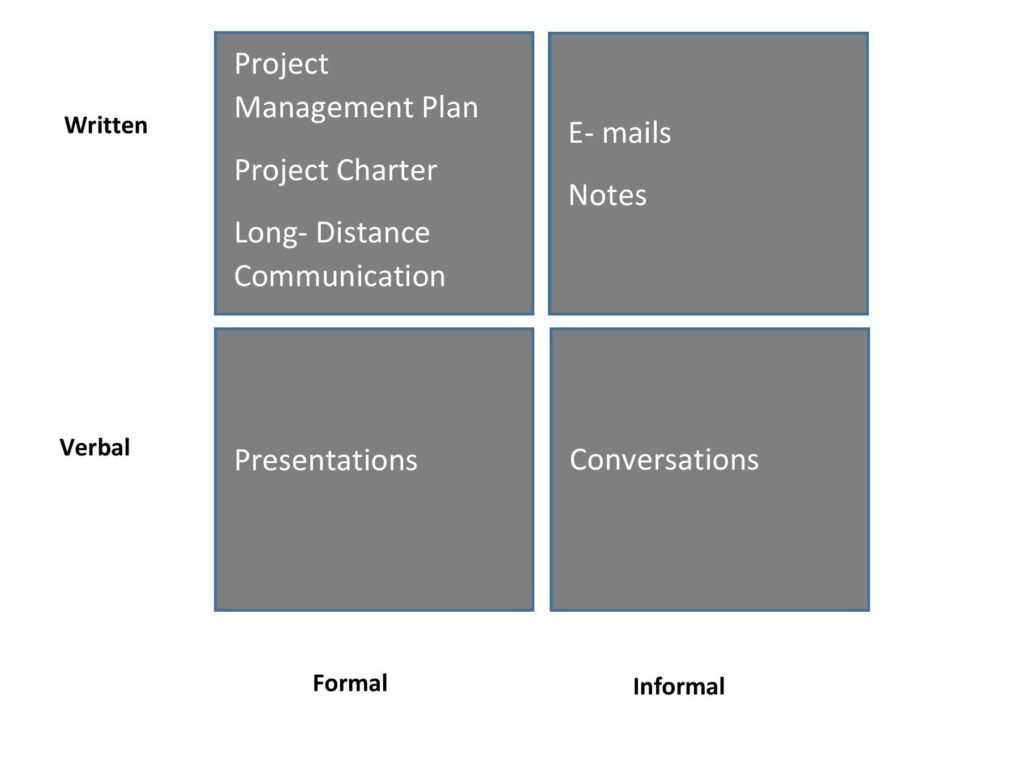
There are many types of communications used by the project manager and other stakeholders in managing the projects. Communication may be either written or verbal. In formal communication, there are some rules to be followed and if it’s an informal communication, casual approach is adopted. Basically, we get four communication methods if we combine different forms of communications.
- Formal Written
- Formal Verbal
- Informal Written
- Informal Verbal
There may be various communication channel in a project depending upon the number of stakeholders in the project. The following formula is used to calculate the number of communication channels in a project:

Where n= number of stakeholders
Example: If there are 12 stakeholders in a project, find the number of communication channels in the project.

Note that in the projects where large number of communication channels exist, it becomes complicated if the communication is not structured.
Project Communications Management Processes as Defined in PMBOK
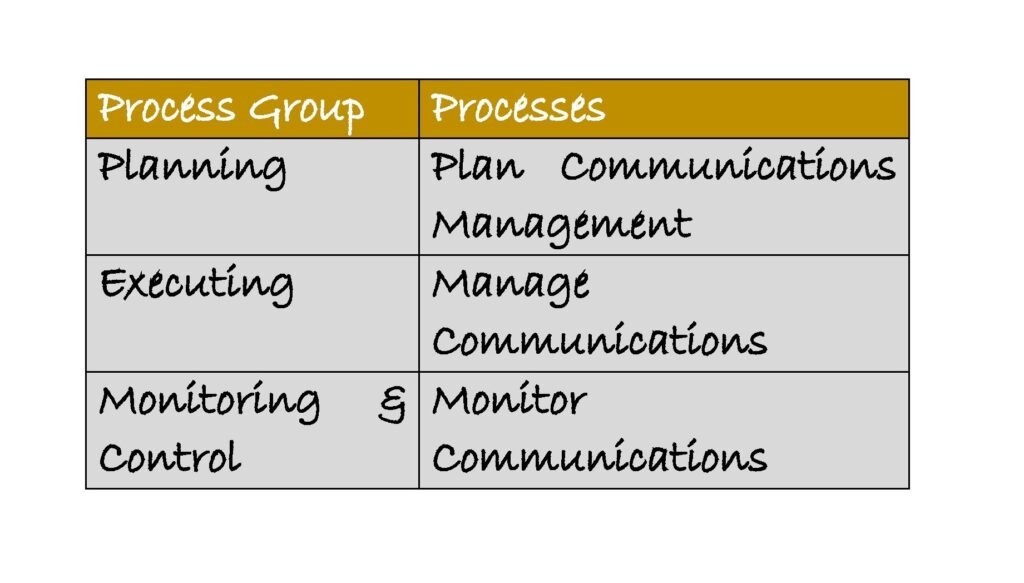
The Project Management Body of Knowledge (PMBOK) defines three processes that are involved in project communications management. These process belongs to different process groups. The mapping of these processes is given in the following table.
Process Mapping of Project Resource Management Knowledge Area
Let’s take a closer look at each process.
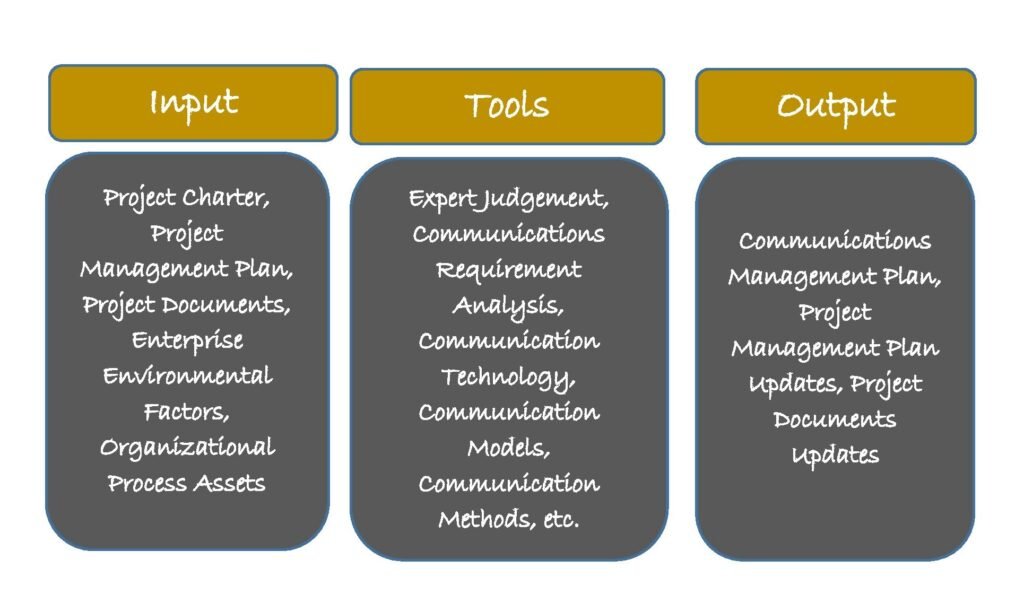
Plan Communications Management
This process involves developing a communications management plan that outlines how communications will be conducted, what information will be communicated, and who will receive the communication. The plan also includes the communication frequency, format, and language. This process belongs to the planning process group.
The Input, tools and output of this process is as follows:
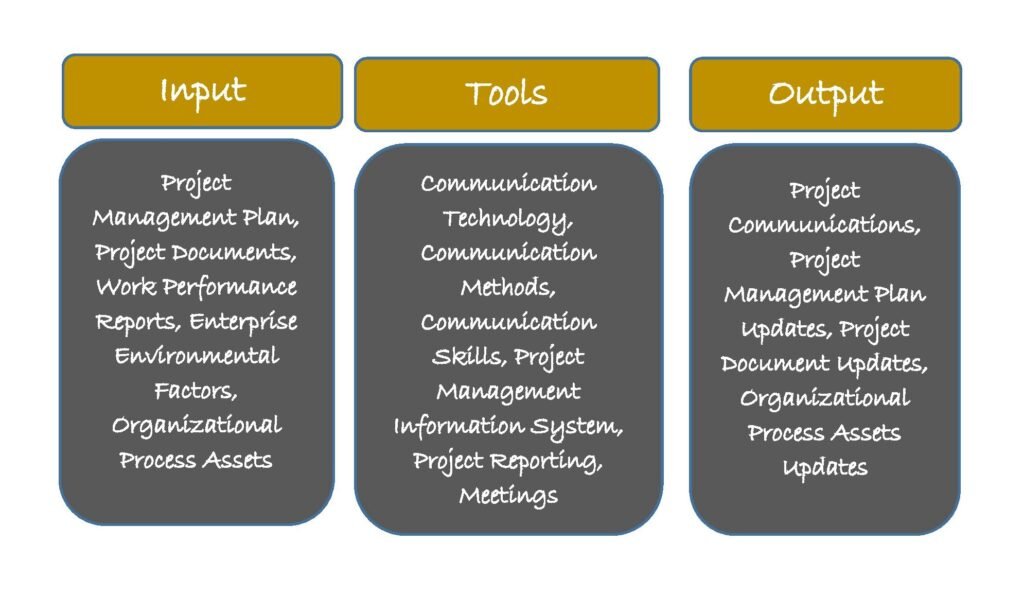
Manage Communications
This process involves creating, collecting, distributing, storing, and retrieving project information according to the communications management plan. The goal is to ensure that all stakeholders receive timely and accurate information. This process belongs to the executing process group.
The Input, tools and output of this process is as follows:
Monitor Communications
This process involves tracking project communications to ensure that they are meeting stakeholder needs and the communication plan’s objectives. It also involves identifying and addressing communication issues and making necessary adjustments to the plan. This process is the part of ‘Monitoring & Control’ Process Group.
The Input, tools and output of this process is as follows:
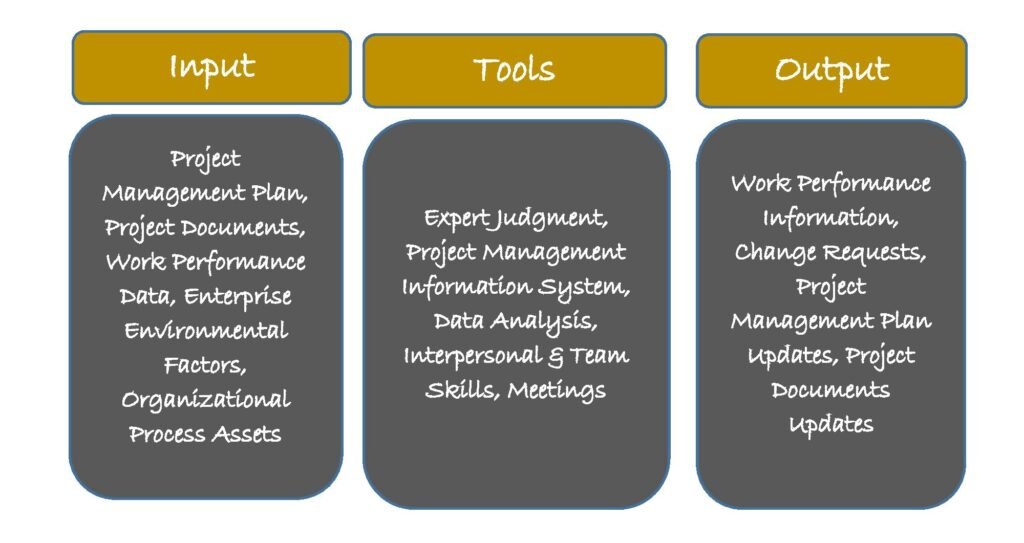
Effective project communication is critical to the success of any project. It helps to ensure that all stakeholders are informed, engaged, and aware of project progress and changes. By following the PMBOK processes for project communications management, project managers can create a clear communication plan, effectively communicate with stakeholders, and ensure project success.
Effective project communication management is a key component of successful project management. It helps to ensure that project stakeholders are informed, engaged, and aware of project progress and changes. By following the PMBOK processes for project communications management, project managers can create a clear communication plan, effectively communicate with stakeholders, and ensure project success.
Conclusion
Project communications management is an essential process that requires careful planning, execution, and monitoring. By developing a communication plan, identifying stakeholders, and monitoring stakeholder engagement, project managers can ensure that all stakeholders are informed and engaged throughout the project. Effective communication management is critical to the success of any project, and by following the PMBOK processes, project managers can achieve this critical success factor.
Also read: Project Resource Management: Processes as Defined in PMBOK
Rajesh Pant is a Civil Engineer and Infrastructure Management professional with approximately 25 years of experience in the planning, implementation, coordination, management and execution of large-scale government infrastructure projects. His professional experience encompasses project management, procurement, contract administration, construction management and quality control of infrastructure projects.
He also possesses nearly eight years of experience in Externally Aided Projects (EAPs), particularly in project implementation, procurement and contract management of World Bank-funded projects. His professional exposure includes working with projects financed by multilateral development organisations, providing valuable insights into international procurement practices, project implementation frameworks and contract management requirements.
He holds a Master of Technology (M.Tech.) in Civil Engineering and a Master of Business Administration (MBA) in Infrastructure Management, combining technical engineering expertise with management and administrative capabilities.
With extensive experience in public infrastructure development and government project management, Rajesh brings a practical, multidisciplinary perspective to the fields of contract management, procurement, project management and construction management.