


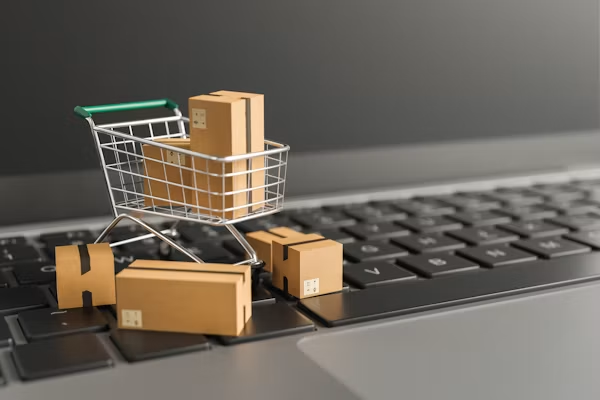
Starting an online business has become easier with the growth of e-commerce. However, many aspiring entrepreneurs hesitate to start because they do not have enough money to purchase inventory, rent storage space, or manage product deliveries. Dropshipping offers an alternative business model that allows entrepreneurs to sell products online without keeping stock themselves.
But what exactly is dropshipping? How does it work, how much investment does it require, and how can a beginner start a dropshipping business?
In this article, we will explain the meaning of dropshipping, its advantages and disadvantages, the steps involved in starting the business, and practical examples to help you understand the model.
What Is a Dropshipping Business?
Dropshipping is an e-commerce business model in which an online seller markets and sells products to customers without storing inventory. When a customer places an order, the seller purchases the product from a third-party supplier, who ships it directly to the customer.
The seller generally manages the online store, marketing, customer communication, and order processing, while the supplier handles inventory storage, packing, and shipping.
In simple terms, you sell the product, but your supplier stores and delivers it.
For example, suppose you create an online store selling mobile accessories. A customer purchases a phone stand from your website for Rs. 799. You then place an order with your supplier, who charges you Rs. 450 and ships the product directly to your customer.
The difference between your selling price and the supplier’s price is Rs. 349. However, this is not your final profit because you may also have advertising costs, payment processing fees, platform charges, returns, and other business expenses.
How Does Dropshipping Work?
The dropshipping process generally follows these steps:
- Create an online store: Set up a website or use a suitable e-commerce marketplace to display products.
- Select products: Choose products that customers are likely to purchase and that offer a reasonable margin.
- Find suppliers: Partner with suppliers who can provide reliable products and fulfil orders.
- List products for sale: Upload product images, descriptions, prices, and delivery information.
- Receive customer orders: A customer purchases a product from your online store.
- Forward the order to the supplier: You pay the supplier according to the agreed price and provide the delivery details.
- Supplier ships the product: The supplier packs and dispatches the product to the customer.
- Provide customer support: You handle customer questions, complaints, returns, and refunds according to your policies.
The seller remains responsible for the customer’s overall shopping experience, even when the supplier performs the physical delivery.
Example of a Dropshipping Business
Suppose you start an online store selling home and kitchen accessories. You select a product from a supplier and list it on your website.
Consider the following illustrative calculation:
| Particulars | Amount |
| Selling price per product | Rs. 999 |
| Supplier’s product and fulfilment cost | Rs. 550 |
| Gross margin before other expenses | Rs. 449 |
| Advertising cost per order | Rs. 180 |
| Payment and platform costs | Rs. 50 |
| Return and other cost allowance | Rs. 60 |
| Estimated profit per order | Rs. 159 |
If you complete 200 profitable orders in a month, your estimated operating profit would be Rs. 31,800, assuming these costs remain consistent.
These figures are only an illustration, not a guarantee of actual results. Real margins depend on the product, supplier, marketing expenses, customer returns, shipping costs, and competition. Taxes and any other unlisted expenses may reduce the final profit further.
This example demonstrates an important point: a high difference between the selling price and supplier cost does not necessarily mean high profitability.
Advantages of a Dropshipping Business
1. Low Initial Investment
Traditional retail businesses often require money to purchase inventory before making sales. With dropshipping, you generally purchase the product from the supplier after receiving a customer order.
This can reduce the initial inventory investment, although you still need money for website development, marketing, samples, software, and working capital.
2. No Need for Your Own Warehouse
Because the supplier stores the products, you usually do not need to rent a warehouse or manage inventory yourself. This makes the model attractive to beginners who want to operate from home.
3. Wide Product Selection
You can list products from different categories, depending on your supplier arrangements. These may include home accessories, stationery, fashion accessories, hobby products, and selected lifestyle goods.
However, it is better to start with a focused product category rather than listing hundreds of unrelated items.
4. Location Flexibility
You can manage many aspects of the business through a computer or smartphone. This provides flexibility in where you work, although supplier coordination and customer support still require regular attention.
5. Opportunity to Test Products
You can test customer demand for different products without purchasing large quantities of stock in advance. This can help you identify promising products before considering bulk purchasing or a different fulfilment model.
Disadvantages and Risks of Dropshipping
Despite its advantages, dropshipping is not a guaranteed or effortless way to earn money.
1. Low Profit Margins
Since products are easy for competitors to list, price competition can be intense. Advertising costs and customer acquisition expenses may consume a large portion of your margin.
2. Dependence on Suppliers
You may have limited control over product quality, stock availability, packaging, and delivery speed. If the supplier sends a defective product or delays an order, your customer may blame your business.
3. Shipping and Delivery Problems
Some suppliers ship slowly or provide inconsistent tracking information. Long delivery times can lead to cancellations, negative reviews, and refund requests.
4. Returns and Refunds
Customers expect a seller to resolve problems with incorrect, damaged, or unsuitable products. Your supplier’s return policy may not match your own obligations to customers.
Before partnering with a supplier, establish clear procedures for returns, replacements, damaged products, and refunds.
5. Strong Competition
Many sellers may offer identical products. You need a clear reason for customers to buy from your store, such as better product information, reliable service, a specialised product range, or a stronger brand.
How to Start a Dropshipping Business Step by Step
Step 1: Choose a Product Niche
A niche is a focused category of products aimed at a particular group of customers.
Examples include:
- Home organisation products
- Kitchen accessories
- Desk and office accessories
- Travel organisers
- Hobby and craft supplies
- Pet accessories
When selecting a niche, consider customer demand, competition, product quality, shipping difficulty, and potential profit margins.
Beginners may benefit from avoiding fragile, counterfeit, highly regulated, or complicated electronic products until they understand the relevant risks and compliance requirements.
Step 2: Research Market Demand
Before investing money, investigate whether customers are interested in the products you plan to sell.
You can research:
- Search trends and relevant keywords.
- Customer reviews on e-commerce platforms.
- Competitor prices and product descriptions.
- Common complaints about existing products.
- Social media discussions and advertising trends.
Look for products that solve a clear customer problem or serve a specific need. Do not rely solely on viral videos or claims that a product is guaranteed to become a bestseller.
Step 3: Find Reliable Suppliers
Your supplier is one of the most important parts of the business.
You can explore domestic manufacturers, wholesalers, distributors, and suppliers offering direct-to-customer fulfilment. Some e-commerce platforms and specialised services also connect sellers with suppliers.
Before finalising a supplier, check:
- Product quality and consistency.
- Actual stock availability.
- Processing and delivery times.
- Shipping and fulfilment charges.
- Return and replacement policies.
- Tracking facilities.
- Packaging quality.
- Business credentials and communication.
Whenever possible, order product samples and test them yourself. Confirm the complete cost of delivering an order before deciding your selling price.
Step 4: Select a Sales Channel
You need a place where customers can discover and purchase your products.
Option A: Your own website
You can build an online store using an e-commerce platform or a suitable website solution. This gives you more control over branding, customer experience, and store design, but you must attract visitors and manage the technical setup.
Option B: An online marketplace
Marketplaces may provide access to existing shoppers, but seller approval, product eligibility, fulfilment rules, fees, and dropshipping restrictions vary. Read the platform’s current policies before listing products.
Option C: Social media and direct selling
Social media can help you showcase products and build a customer base. You still need a reliable way to accept orders, process payments, deliver products, and manage customer service.
For beginners, the best channel is usually the one that fits their budget, technical ability, target market, and supplier arrangements.
Step 5: Set Competitive Prices
Your selling price should cover all relevant costs, not just the supplier’s product price.
A basic calculation is:
Selling price − total variable cost per order = contribution per order
Variable costs may include product cost, shipping, payment processing, marketplace fees, advertising, packaging charges, and an allowance for returns or refunds.
You must also account for fixed costs such as website subscriptions, software, and professional services when calculating overall profitability.
Avoid setting prices only by copying competitors. Your actual cost structure may be different from theirs.
Step 6: Build Your Online Store
Create a professional store with clear product pages. Include:
- Accurate product titles and descriptions.
- Genuine, authorised product images.
- Transparent prices and shipping charges.
- Estimated delivery timelines.
- Contact and customer support details.
- Clear shipping, return, refund, and privacy policies.
- Secure checkout and appropriate payment options.
Do not make unsupported claims about product performance or delivery speed. Accurate information helps build trust and reduces disputes.
Step 7: Complete Business and Legal Formalities
If you operate in India, determine the appropriate business structure and applicable registrations before launching.
Depending on your circumstances, you may need to consider PAN, business banking, GST registration and invoicing, consumer protection requirements, e-commerce rules, data privacy obligations, and product-specific regulations.
GST and e-commerce requirements can vary according to the sales channel, business model, turnover, location, and type of transaction. Do not assume that every dropshipping seller has identical obligations. Obtain advice from a qualified accountant or tax professional and check the current rules that apply to your business.
If you sell internationally, also investigate customs, import duties, taxes, product compliance, delivery disclosures, and consumer rights in the destination market.
Step 8: Market Your Products
Creating a store does not guarantee that customers will find it. You need a plan to attract relevant visitors.
Potential marketing methods include:
- Search engine optimisation (SEO).
- Helpful blog articles and product guides.
- Social media content.
- Short product demonstration videos.
- Paid search and social advertising.
- Email marketing with appropriate consent.
- Influencer collaborations.
Start with a small, measurable marketing budget. Track website visitors, conversion rate, cost per customer acquisition, average order value, refund rate, and profit per order.
If advertising costs more than the contribution generated by each order, increasing sales may increase your losses rather than your profits.
Step 9: Test and Improve
Begin with a limited selection of products and a manageable order volume. Monitor delivery times, customer feedback, supplier performance, cancellations, and returns.
Remove products that consistently cause problems. Improve descriptions, pricing, advertising, and customer support based on actual results.
Once the business model is profitable and reliable, you can consider expanding the product range or negotiating better supplier terms.
How Much Investment Is Required to Start Dropshipping?
There is no single investment amount that suits every business. The budget depends on the sales channel, number of products, marketing strategy, and operational requirements.
A beginner’s budget may include:
| Expense | What it covers |
| Store setup | Website, domain, or marketplace setup |
| Product samples | Testing quality and packaging |
| Marketing | Advertising and content creation |
| Software | Store tools and order management |
| Working capital | Supplier payments, refunds, and payment delays |
| Compliance | Applicable registration, accounting, and professional fees |
Even when you do not hold inventory, you may have to pay suppliers before a payment processor releases customer funds. You should therefore keep sufficient working capital to handle order fulfilment, refunds, and unexpected costs.
Start with a budget you can afford to lose while testing demand. Avoid borrowing heavily or spending large amounts on advertising before validating your business model.
Common Mistakes to Avoid
New dropshipping entrepreneurs often make the following mistakes:
- Choosing products only because they are trending.
- Failing to test samples or verify suppliers.
- Ignoring shipping times and return costs.
- Pricing products without calculating all expenses.
- Spending heavily on advertisements before testing conversion rates.
- Using misleading product images or descriptions.
- Ignoring customer complaints.
- Assuming revenue is the same as profit.
- Failing to check applicable laws and marketplace rules.
Avoiding these mistakes can improve your chances of building a sustainable business, although success is never guaranteed.
Conclusion
Dropshipping is an e-commerce business model that allows entrepreneurs to sell products without maintaining their own inventory. It can reduce the cost and complexity of entering online retail, but it does not eliminate business risks.
The most important factors are choosing a suitable niche, finding reliable suppliers, calculating realistic profit margins, building customer trust, and controlling marketing costs.
For beginners, the practical approach is to start small, test product demand, monitor every order’s profitability, and expand only when the business demonstrates consistent results.
Remember: dropshipping is not a shortcut to guaranteed income. It is a retail business that requires research, marketing, customer service, and disciplined financial management.
Frequently Asked Questions (FAQs)
1. Is dropshipping profitable?
It can be profitable, but results depend on product margins, advertising costs, supplier reliability, competition, refunds, and operating expenses. Some businesses lose money, especially when customer acquisition costs are high.
2. Can I start dropshipping with no money?
A completely cost-free business is difficult to operate sustainably. Even if you use a free sales channel, you may need money for samples, marketing, supplier payments, refunds, or business compliance.
3. Do I need to manufacture products?
No. Dropshipping sellers generally source products from manufacturers, wholesalers, or distributors. The supplier stores and ships the products while the seller focuses on sales and customer service.
4. Can I start a dropshipping business in India?
Yes, subject to the applicable tax, consumer protection, e-commerce, product, and marketplace requirements. Research these obligations and verify supplier arrangements before launching.
5. What is the difference between dropshipping and traditional e-commerce?
In traditional inventory-based e-commerce, the seller usually purchases and stores products before selling them. In dropshipping, a third-party supplier generally stores the products and ships each order directly to the customer.
6. Which products are best for dropshipping?
There is no universally best product. Look for products with demonstrable demand, dependable suppliers, manageable shipping costs, acceptable return rates, and enough margin to cover marketing and other expenses.
7. Is dropshipping a passive-income business?
No. Although you may not handle physical inventory, you still need to manage suppliers, marketing, customer questions, delivery problems, refunds, and financial performance.
Also read: Small Business Ideas to Start a Great Business

