Memorandum and Articles of Association: Definition and Key Differences

Table of contents
During the registration process of the company some mandatory documents are to be submitted to the Registrar of Companies (ROC). Memorandum and Articles of Association are such documents which has to be mandatorily submitted for the registration of the company. In this article, we will learn about Memorandum and Article of Association and key differences between them.
Memorandum of Association
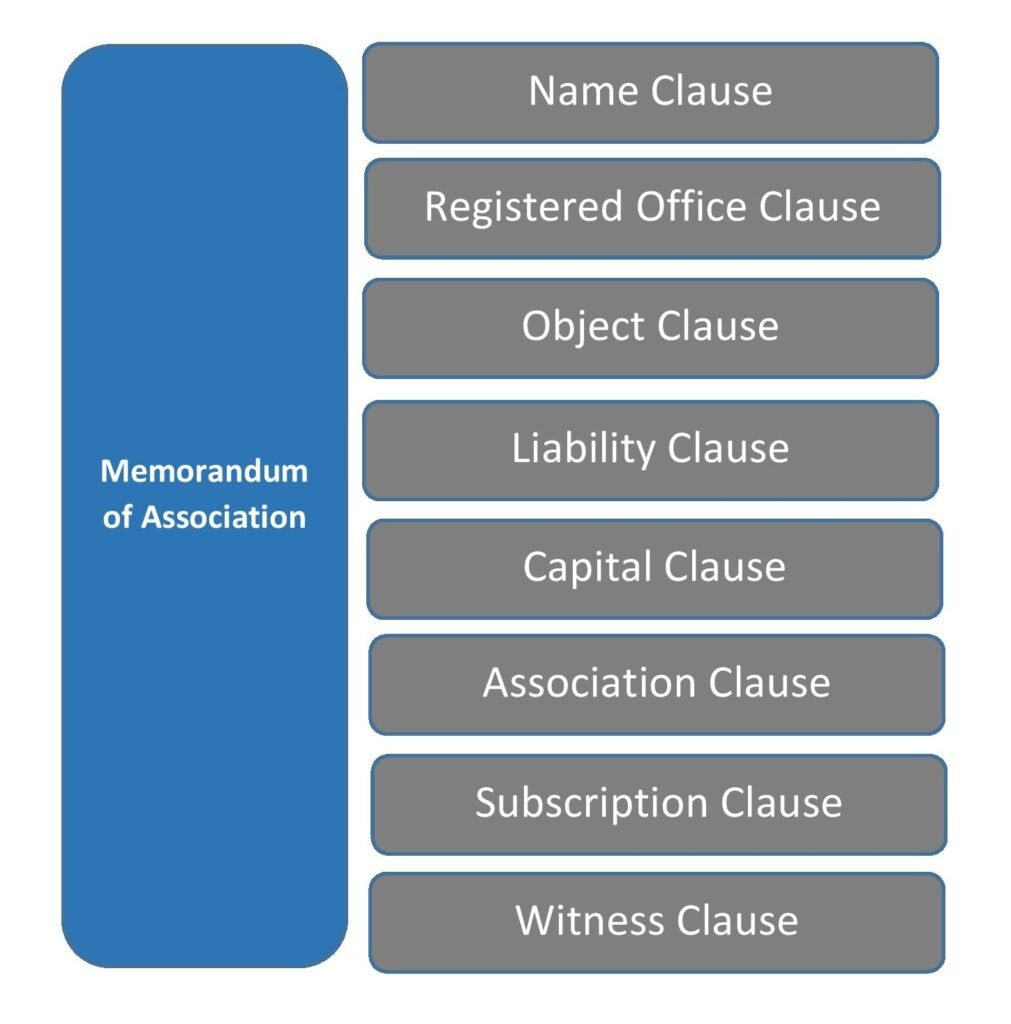
The Memorandum of Association is a legal document which states the purpose of a company, i.e., it describes why a company is formed. It establishes the authority of a company and the terms and conditions under which the company operates. It also includes all the laws and regulations through which it operates and intersects with the outside world.
The Memorandum of Association defines the boundaries within which the company operates. If the company goes beyond its authority, as defined in the Memorandum of Association, then the activity is deemed to be supra vires and therefore null.
The Memorandum of Association is open for media and any other person who want to have the information of the company. Anyone can pay the required fee to the Registrar of Companies and receive the Memorandum of Association of the company. If a person or an organization is going to do some business with a company or is entering into a contract with the company, then it is always advisable that he/she should go through the Memorandum of Association of the company to have a thorough knowledge about the authority, rules and regulations of the company.
Articles of Association
The Article of Association describes the set of rules and regulations which govern the operation of a company. The Articles of Association can put restrictions on the powers of the company. It means that the directors can will not perform certain coarse of actions without the approval of stakeholders. In other words, the Articles of Association safeguard the interest of stakeholders.
The Articles of Association consists of rights, responsibilities, powers and duties of members and directors of the company. It also includes the information regarding accounts and audits of the company.
Difference Between the Memorandum of Association and Articles of Association
The key difference between the Memorandum of Association and Articles of Association is as follows:
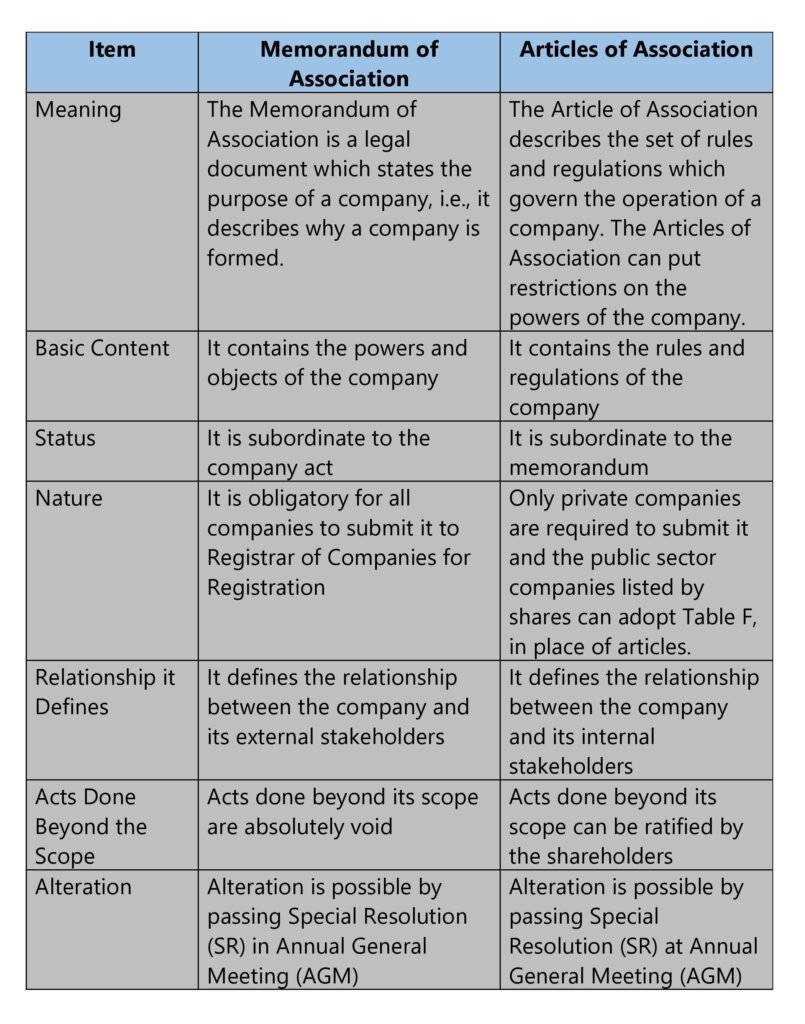
- The Memorandum of Association Contains all the conditions required for the registration of the company while the Articles of Association contains all the rules and regulation which will govern the operation of the company.
- Memorandum of Association is subsidiary to the Companies Act, whereas Articles of Association is subsidiary to both Memorandum of Association as well as the Act.
- In case of any discrepancy between the Memorandum of Association and Articles of Association, the Memorandum of Association prevails.
- The Memorandum of Association describes the powers and objects of the company while the Articles of Association contains rules and regulations of the company.
- The Memorandum of Association contains six clauses as per the Company Act, while there is no such restriction with the Articles of Association.
- Memorandum of Association is to be submitted mandatorily with the Registrar of Companies for the registration while the Articles of Association is voluntarily submitted for the registration.
- The Memorandum of Association outlines the relationship of the company with its external stakeholders while the Articles of Association describes the relationship between the company and its internal members and also within the members themselves.
- The acts performed beyond the scope of memorandum are absolutely null and void. In contrast, acts done beyond the scope of articles can be ratified by unanimous voting of all shareholders.
Comparison Table
Conclusion
The Memorandum and Articles of Association are important documents for the company which provide the useful information to the stakeholders. The Memorandum of Association is a legal document which states the purpose of a company, i.e., it describes why a company is formed. It establishes the authority of a company and the terms and conditions under which the company operates. It also includes all the laws and regulations through which it operates and intersects with the outside world. The Article of Association describes the set of rules and regulations which govern the operation of a company. The Articles of Association can put restrictions on the powers of the company. A company has to act within the rules, regulations, powers and boundaries set by the Memorandum of Association and Articles of Association and safeguard the interests of stakeholders. They also help in the smooth operation of the company and hence both the Memorandum and Articles of Association should be carefully drafted by the company.
Also read: Memorandum of Association, Its Formats and Contents
Rajesh Pant is a Civil Engineer and Infrastructure Management professional with approximately 25 years of experience in the planning, implementation, coordination, management and execution of large-scale government infrastructure projects. His professional experience encompasses project management, procurement, contract administration, construction management and quality control of infrastructure projects.
He also possesses nearly eight years of experience in Externally Aided Projects (EAPs), particularly in project implementation, procurement and contract management of World Bank-funded projects. His professional exposure includes working with projects financed by multilateral development organisations, providing valuable insights into international procurement practices, project implementation frameworks and contract management requirements.
He holds a Master of Technology (M.Tech.) in Civil Engineering and a Master of Business Administration (MBA) in Infrastructure Management, combining technical engineering expertise with management and administrative capabilities.
With extensive experience in public infrastructure development and government project management, Rajesh brings a practical, multidisciplinary perspective to the fields of contract management, procurement, project management and construction management.