Contract ManagementThe Indian Contract Act, 1872, serves as the foundational legal framework governing contracts in India. It outlines the essential elements of a …
RPRajesh Pant · December 14, 2023
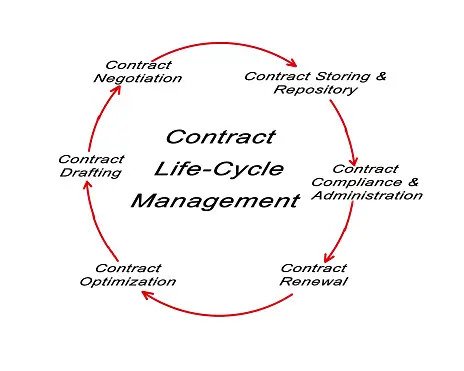
Contract ManagementContract Lifecycle Management (CLM) software is a robust and integrated solution designed to manage the complete contract journey. It encompasses various stages …
STShantanu Trivedi · November 1, 2023
Contract ManagementA contract is a legally binding agreement between two or more parties that outlines the terms and conditions of their relationship. In …
RPRajesh Pant · August 8, 2023
Contract ManagementThe role of contract manager is very crucial for monitoring and execution of a contract. Contract manager is sometimes also referred to …
RPRajesh Pant · June 28, 2023
Contract ManagementThe Arbitration and Reconciliation Act, 1996 is a significant legislative enactment that governs the resolution of disputes through arbitration and conciliation in …
RPRajesh Pant · June 8, 2023
Contract ManagementBuild-Operate-Transfer (BOT) Contract is a financing model which is used to finance the large infrastructure projects through public-private-partnerships. In such projects, a …
RPRajesh Pant · April 4, 2023
Contract ManagementArbitration is a dispute resolution procedure, in which the parties choose one or more arbitrators, to settle a dispute between the parties. …
RPRajesh Pant · March 29, 2023
Contract ManagementCloud based contract management system utilizes dedicated SaaS solutions to manage the lifecycle of an individual contract instead of managing it manually. …
RPRajesh Pant · March 11, 2023
Contract ManagementFramework agreements are the agreements between one of more buyers or suppliers, which basically define the terms and conditions of the contract, …
RPRajesh Pant · January 29, 2023
Contract ManagementSmart contracts are simply programs stored on a blockchain that run when predetermined conditions are met. They typically are used to automate …
STShantanu Trivedi · December 26, 2022